Vision Board Ideas: 85 Inspiring Examples for Goals, Growth, and Daily Life
A grounded, creative guide to vision board ideas for beginners and beyond, with categories for growth, love, work, wellness, and everyday life.
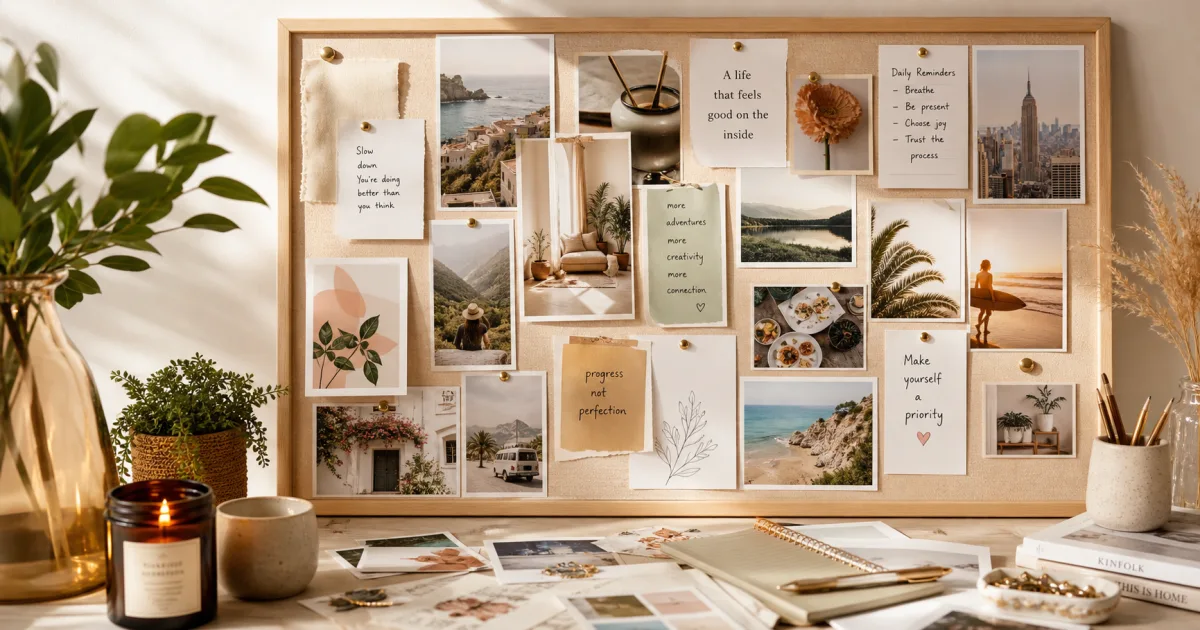
The hardest part of making a vision board is usually not gathering images. It is deciding what belongs on it in the first place. Without that clarity, a board can turn into a crowded collage of nice-looking things that does not actually guide your life.
Good vision board ideas are not only about goals. They are also about atmosphere, values, experiences, and the kind of person you want to become while building your life.
This guide gives you grounded, category-based inspiration so your board can feel intentional instead of random. Use it to choose what matters, not to copy someone else’s dream life.
How to choose the right vision board ideas
Before you collect images, choose the life areas or emotional themes you want the board to support. That decision matters more than the aesthetics. A strong vision board creates focus by filtering what deserves your attention.
- Choose a few categories instead of trying to represent your whole life at once.
- Include both outer goals and inner qualities.
- Pick ideas that create clarity, not pressure.
- Let the board reflect what excites you, not only what looks impressive online.
- Return to feelings as well as achievements: calm, confidence, freedom, creativity, belonging.
If you want the board to stay part of daily life instead of becoming a forgotten project, a guided digital tool like Grateful Panda’s vision board makes it easier to revisit and refine over time.
85 vision board ideas
Use these categories to build a board that feels personal and usable. You do not need all of them. The point is to choose what creates direction.
Vision board ideas for personal growth
These ideas are better when you want your board to shape who you are becoming, not only what you want to own.
- Feeling more confident in your voice and decisions.
- Becoming calmer under pressure.
- Trusting yourself more in everyday choices.
- Building a stronger sense of identity.
- Practicing healthier boundaries.
- Growing into a more grounded daily routine.
- Learning to rest without guilt.
- Feeling more emotionally steady.
- Becoming more disciplined in a gentle way.
- Letting go of perfectionism.
- Developing a growth mindset around setbacks.
- Becoming more present instead of constantly rushing ahead.
- Feeling more connected to your values.
- Creating a life that feels more honest and less performative.
- Choosing self-respect over people-pleasing.
Vision board ideas for career and money
Use these when you want your board to clarify direction, ambition, and the practical life you want to build.
- A job title or field you genuinely want to grow into.
- A workspace aesthetic that reflects how you want work to feel.
- Income goals connected to stability or freedom.
- A reminder of the skills you want to master.
- The type of clients, team, or culture you want around you.
- A side project or business idea you want to bring to life.
- A portfolio, certification, or milestone you want to complete.
- A visual for debt freedom or financial breathing room.
- Savings goals for something meaningful rather than abstract.
- A phrase that reminds you to think long term instead of only urgently.
- Examples of leadership, creativity, or courage you want to embody at work.
- A future office, studio, or flexible-work vision that excites you.
- Money habits that feel responsible and calm.
- A reminder that success can include rest and health, not only output.
- A version of professional life that feels aligned rather than impressive from the outside.
Vision board ideas for love and relationships
A vision board can hold relationship hopes without turning them into a fantasy checklist. Focus on qualities and experiences more than perfect scenes.
- How you want love to feel: safe, playful, honest, steady, or expansive.
- Friendships that feel reciprocal and warm.
- A home environment that supports closeness and calm.
- Quality time rituals you want more of.
- The kind of communication you want to practice.
- Relationship values like trust, softness, loyalty, or curiosity.
- A future family rhythm if that matters to you.
- Images that represent belonging rather than only romance.
- The social life you want to build around yourself.
- A reminder that healthy love includes boundaries and self-respect.
- A vision for how you want to show up in relationships, not only what you want to receive.
- Community, chosen family, or supportive friendships.
- Healing from old relational patterns.
- Feeling more open to connection without abandoning yourself.
- The emotional tone you want your close relationships to have.
Vision board ideas for wellness and lifestyle
These ideas help if you want your board to support how daily life feels in your body, home, and routines.
- Sleep that feels more restorative and protected.
- Movement that feels enjoyable rather than punishing.
- Meals that make you feel nourished and steady.
- A calmer morning routine.
- A bedroom or living space that feels less chaotic.
- More sunlight, nature, and outdoor time in your week.
- A healthier relationship with your phone and attention.
- Energy that comes from care, not only caffeine and adrenaline.
- A version of wellness that feels sustainable, not extreme.
- Creative hobbies that bring you back to yourself.
- Therapy, journaling, or reflection habits that support emotional health.
- A home vibe that feels softer, cleaner, or more inspiring.
- A reminder to make room for joy, not only productivity.
- Rituals that help you reset after hard days.
- A lifestyle that looks more spacious and less constantly overloaded.
Vision board ideas for travel, joy, and life experiences
Not every vision board item has to be serious. Some of the best boards include experiences that remind you what you want life to feel like.
- Trips to places that have been calling to you for years.
- Weekend experiences that feel alive and memorable.
- Seasonal rituals you want to romanticize more.
- Creative adventures like classes, retreats, or workshops.
- Tiny luxuries you want to make room for.
- A city, landscape, or culture you want to experience more deeply.
- A future celebration or milestone you are working toward.
- More beauty in ordinary life.
- Moments that feel playful, spontaneous, or expansive.
- Experiences that make you feel more like yourself.
- A vision for how you want weekends or vacations to feel.
- A life with more laughter and less numb routine.
- Rooms, tables, or environments that reflect the life atmosphere you want.
- Something you have always wanted to try but keep postponing.
- Memories you want to create, not only goals you want to achieve.
Digital vision board ideas for beginners
Digital vision boards work best when they are easy to revisit. These ideas help beginners keep the board useful instead of decorative only.
- Choose three to five life areas instead of covering everything at once.
- Use one clean mood or color direction so the board feels intentional.
- Mix images with a few short phrases that ground the theme.
- Include one or two daily-life reminders, not only big future outcomes.
- Make a phone-friendly version you will actually see often.
- Use sections for goals, feelings, and habits rather than one giant collage.
- Pair your board with one supporting affirmation or intention.
- Update the board when your values change instead of treating it as permanent.
- Keep only images that create clarity or excitement, not pressure.
- Add one review date so the board becomes a living practice instead of a forgotten file.
- Use a guided tool like the Grateful Panda vision board when you want structure, prompts, and a place to revisit your board daily.
How to make your vision board feel useful, not decorative
A vision board works better when it is not treated like a one-time art project. It becomes more useful when you revisit it, update it, and connect it to what you are actually doing in daily life.
- Choose a few board categories that genuinely matter right now.
- Keep the board visible or easy to open.
- Link each category to one practical next step.
- Use a short affirmation or intention to reinforce the tone of the board.
- Refresh the board when your life direction changes.
If words help you stay connected to the board’s emotional themes, a few grounded affirmations can strengthen the practice. Our daily affirmations guide and the broader affirmations practice page are the best follow-ons for that.
Common mistakes that weaken a vision board
- Adding too many ideas until the board loses focus.
- Choosing images that look aspirational but mean nothing to you personally.
- Using only outcome goals with no emotional direction.
- Treating the board as magic instead of a tool for attention and intention.
- Never revisiting or updating the board once it is made.
The best vision board is not the prettiest one. It is the one that helps you remember what you want, why you want it, and how you want your life to feel while moving toward it.
Frequently asked questions
What are good vision board ideas for beginners?
The best beginner vision board ideas are clear, personal, and not overloaded. Start with a few life areas like personal growth, work, relationships, wellness, or travel, then choose images and words that reflect how you want those areas to feel and evolve.
What should I put on a vision board?
Put goals, moods, values, experiences, and reminders that feel meaningful to you. A strong vision board usually includes both external goals and internal qualities, such as confidence, calm, creativity, steadiness, or joy.
How many categories should a vision board have?
Most people do better with three to five categories at first. Too many sections can make the board feel scattered and harder to revisit with clarity.
Can a digital vision board work as well as a physical one?
Yes. A digital vision board can work very well because it is easier to update, organize, and revisit daily. For many people, access and repetition matter more than whether the board is physical or digital.
Do vision boards need quotes or affirmations?
Not necessarily, but a few short phrases can help. Words work best when they clarify the emotional tone of the board rather than crowd it. If you want that kind of support, affirmations can pair well with vision board themes.
What makes a vision board feel useful instead of random?
A useful vision board is selective. It has a clear emotional direction, meaningful categories, and imagery that reflects what you actually want your life to become. It should feel like a guide for attention, not a pile of attractive images.
Bring this practice into your day
Grateful Panda helps you save affirmations, return to them daily, and pair them with a gentler journaling rhythm when you want more structure than a screenshot or note can give you.